

OpenMusE Lands at Linecheck to Discuss Data and the Future of Music
Landing at Linecheck felt like stepping into a place where the future of music is shaped through dialogue, attention and shared imagination. From 17 to 22 November the festival transformed Milan and Bologna into a constellation of performances, encounters and ideas.
Title image credits: Braga
Within this landscape, Linecheck affirmed its role as an ecosystem in motion, a space where artistic practice meets research and where cultural perspectives evolve through proximity rather than abstraction. For OpenMusE it offered the ideal setting to reconnect with partners at the project’s Closing Event as well as expand conversations and share the project’s vision for a fairer and more transparent European music landscape through participating in the panels and roundtables of the Linecheck Meeting and Festival, poignantly themed “A Beautiful Presence”.
From Data to Discovery
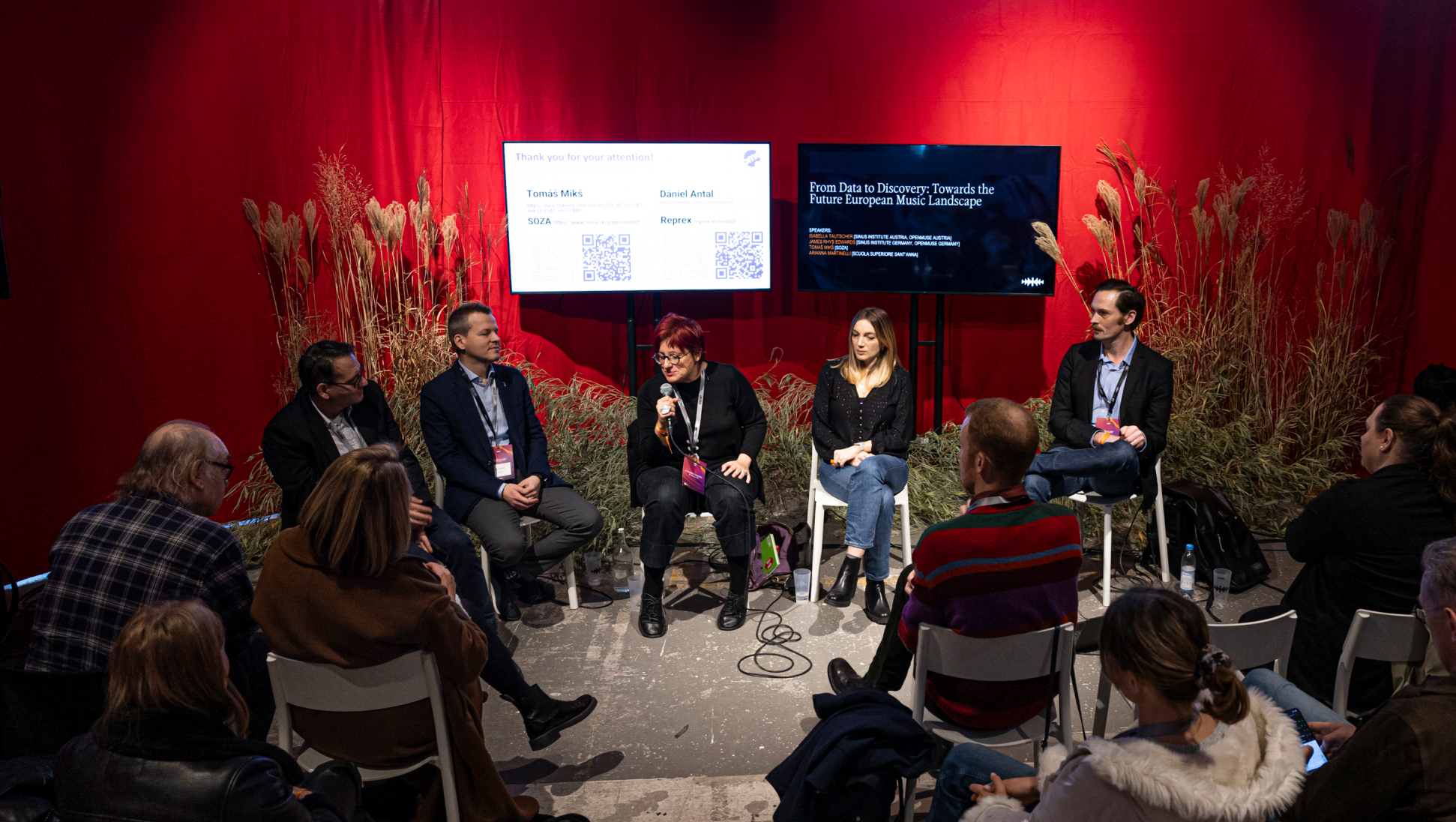
Kicking off the Linecheck conference programme, a lively welcome reception co-hosted by OpenMusE created a warm moment for delegates and guests to meet, reconnect and mark the unfolding of the festival. The spirit of that gathering carried into the session “From Data to Discovery: Towards the Future European Music Landscape”, which explored how open and accessible information can reveal the ways music shapes Europe’s social and cultural landscape.
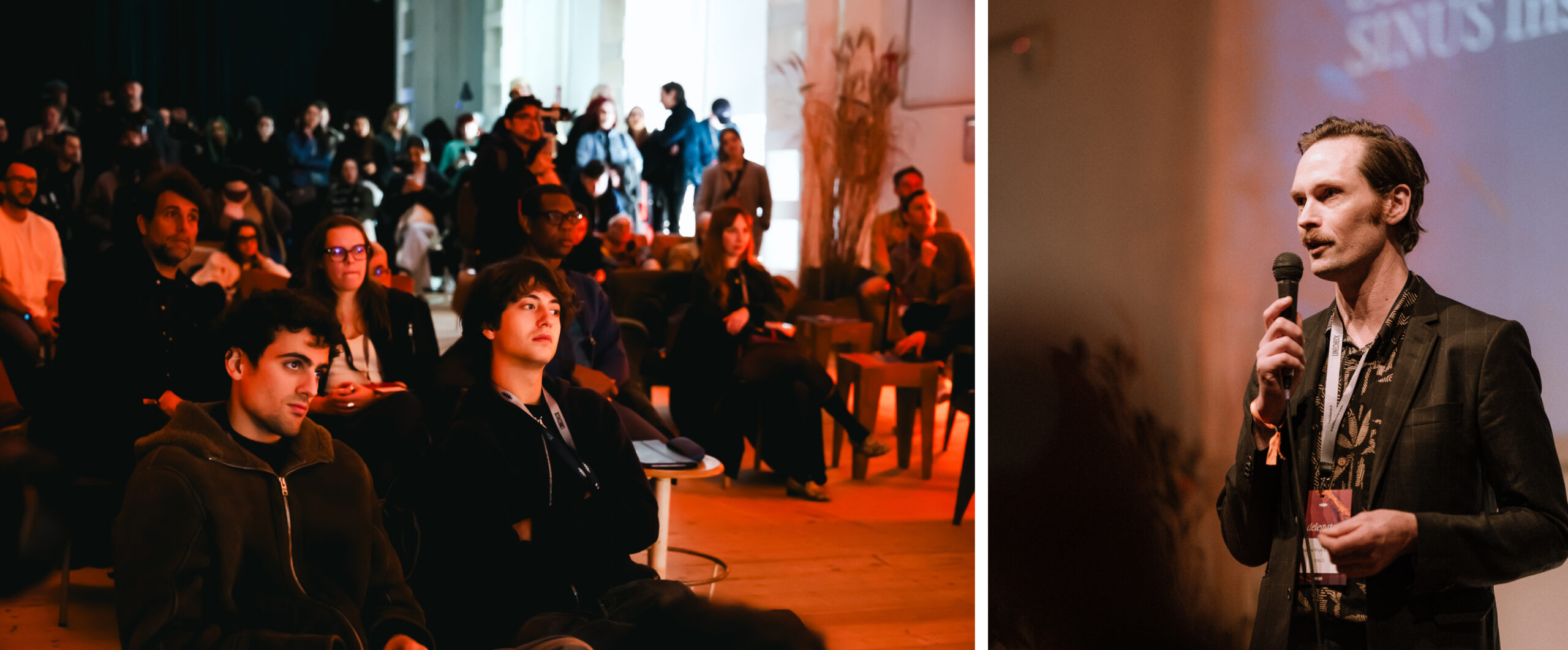
Opening Panel (credits left image: Bremec; right image: Fabiana Amato)
The conversation reflected on how responsibly used data can support better decision making, encourage inclusion and strengthen the infrastructures that sustain music across borders. It also invited the audience to imagine how openness can guide the next phase of Europe’s cultural development, turning collective knowledge into a shared resource for the entire sector.
Is All Diversity Created Equal?
The topics of openness and accessibility were set in motion again at the roundtable “Is All Diversity Created Equal?”, which raised discussion on strengthening intersectional inclusivity and diversity from the perspectives of event production, language and discourse, communications, policy and organisational cultures. The conversation regarded the ‘how’ of tackling arisen safety concerns and the development of safer spaces in music through policy and practice, bringing up the need for more nuanced indicators and measuring for addressing the intersectional complexities in e.g. lineups, staffing, audiences and production, and a shared call for facilitating intersectional safety through conversation and constant involvement.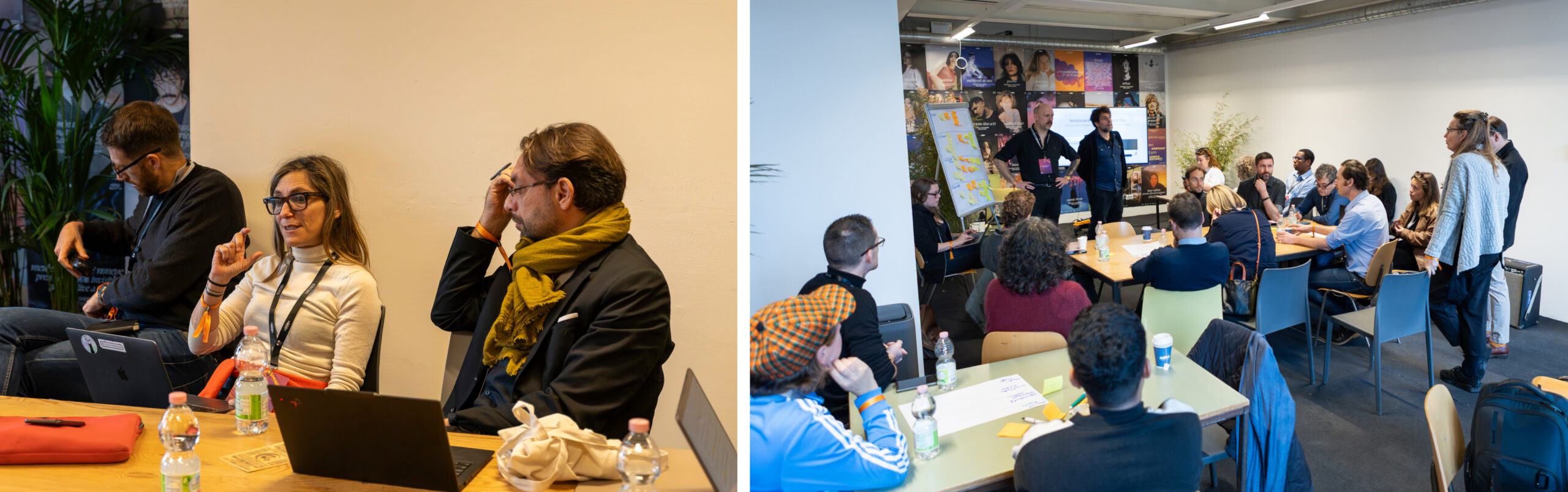
Left image: Diversity Panel (credits: Andrea Munaretto), right image: AI Panel (credits: Federica Mulinacci)
Music Cities: Mega Tours or Local Roots?
The project’s goals of fairness, sustainability, competitiveness and transparency echoed in the ‘closing’ OpenMusE session “Music Cities: Mega Tours or Local Roots?”, highlighting also the necessity to acknowledge the social, cultural and economic value dimensions music both encloses and channels in the everyday life of cities and city-dwellers. The discussion shed light into the interdependent networks within and around musical activity in European cities. It illustrated the significance of venues and events across capacities, activities and genres for sustaining healthy local music scenes, and reflected upon the nuanced interplay and current tensions between the local grassroots and mega tours coexisting in cities. The session explored the makings of a Music City, and the concrete impact open access data and research may have for any city hoping to strengthen and foster the butterfly effect of music’s presence across its cityscape.
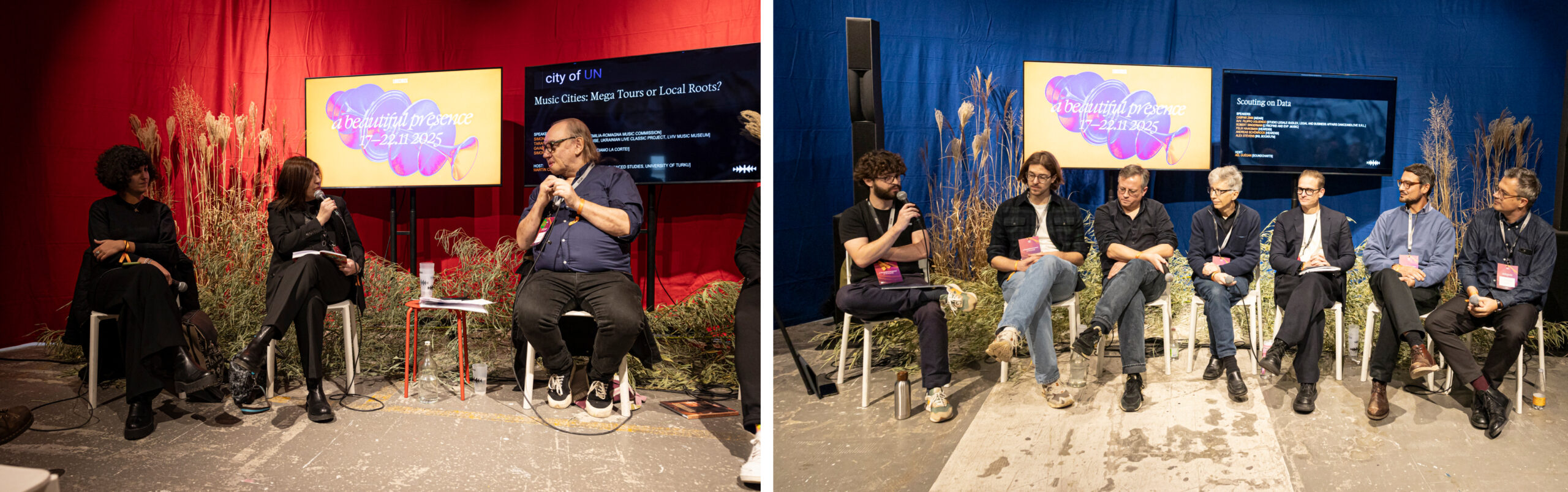
Left image: Music Cities Panel (credits: Braga), right image: Scouting on Data Panel (credits: Braga)
Bringing OpenMusE to a close at Linecheck highlighted the value of meeting places where research and practice coexist, where policymakers and creators can learn from one another and where new models can begin to take shape. As the project moves beyond its formal conclusion, the reflections gathered during the festival remain a compass for envisioning a more transparent, equitable and resilient music ecosystem in Europe.
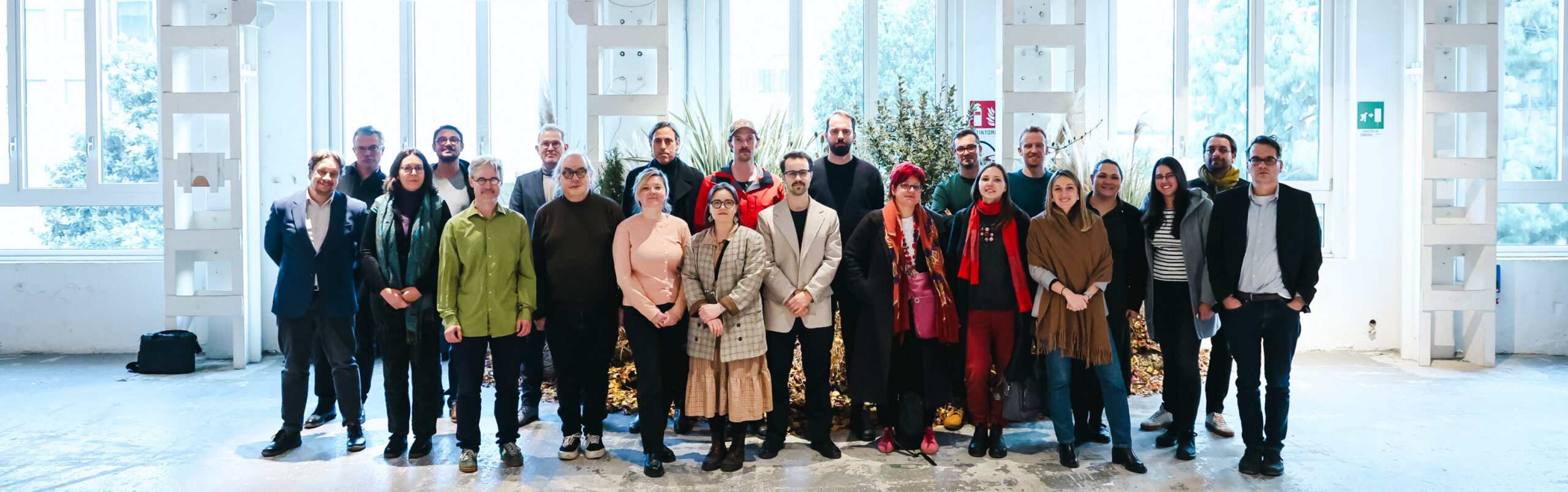 OpenMusE Consortium (credits: Bremec)