

From Research to Action: Open Music Europe’s Policy Pathways
Data for policy. That’s been OpenMusE’s guiding principle since day one—and we’re not alone. Our sister projects Fair Muse and Music360, funded alongside us under the EU’s first Horizon call specifically focused on music, share this ethos. Together, we represent nearly €10 million in research investment, three years of intensive work, and a common conviction: reliable music data enables better music policymaking.
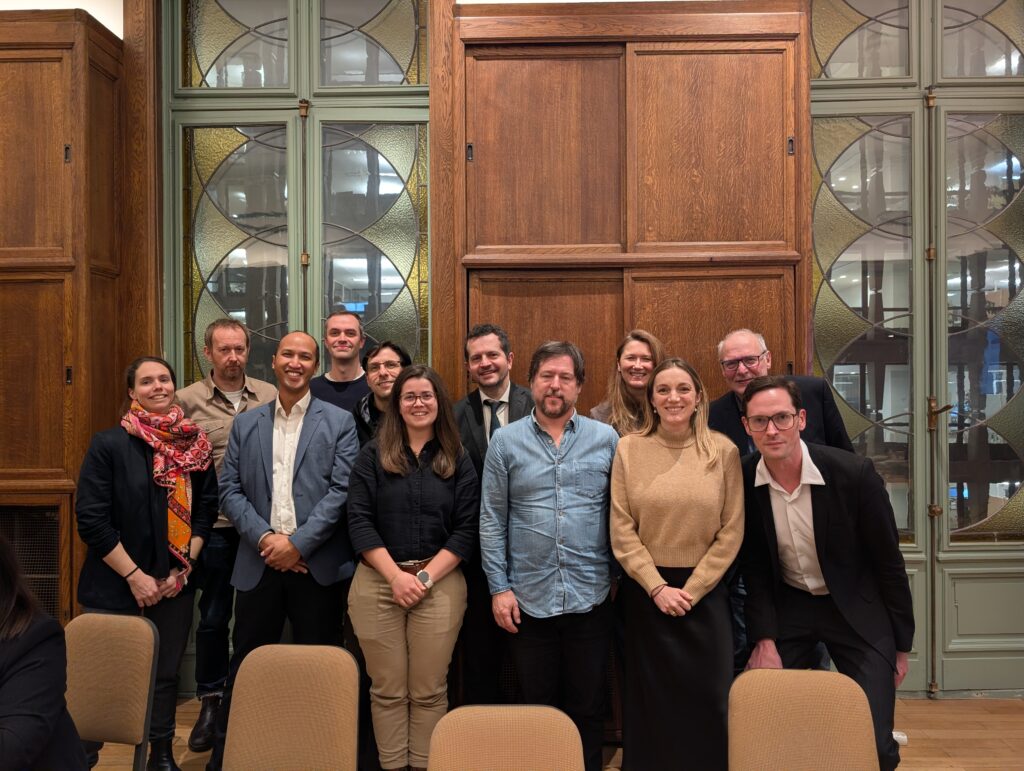
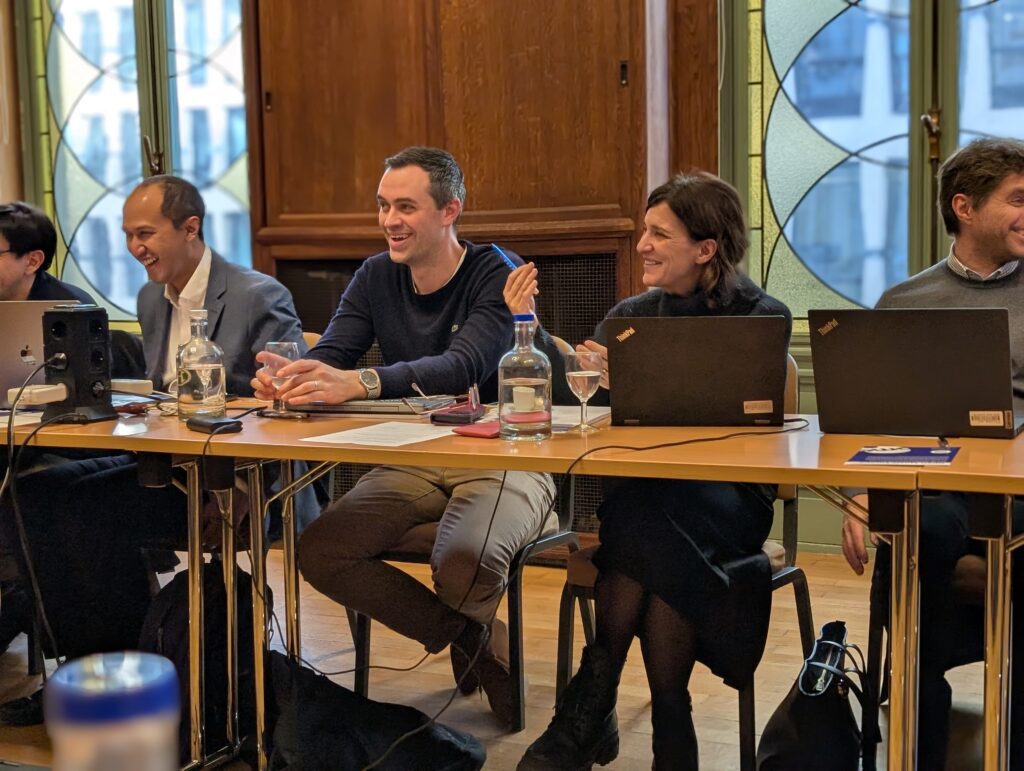
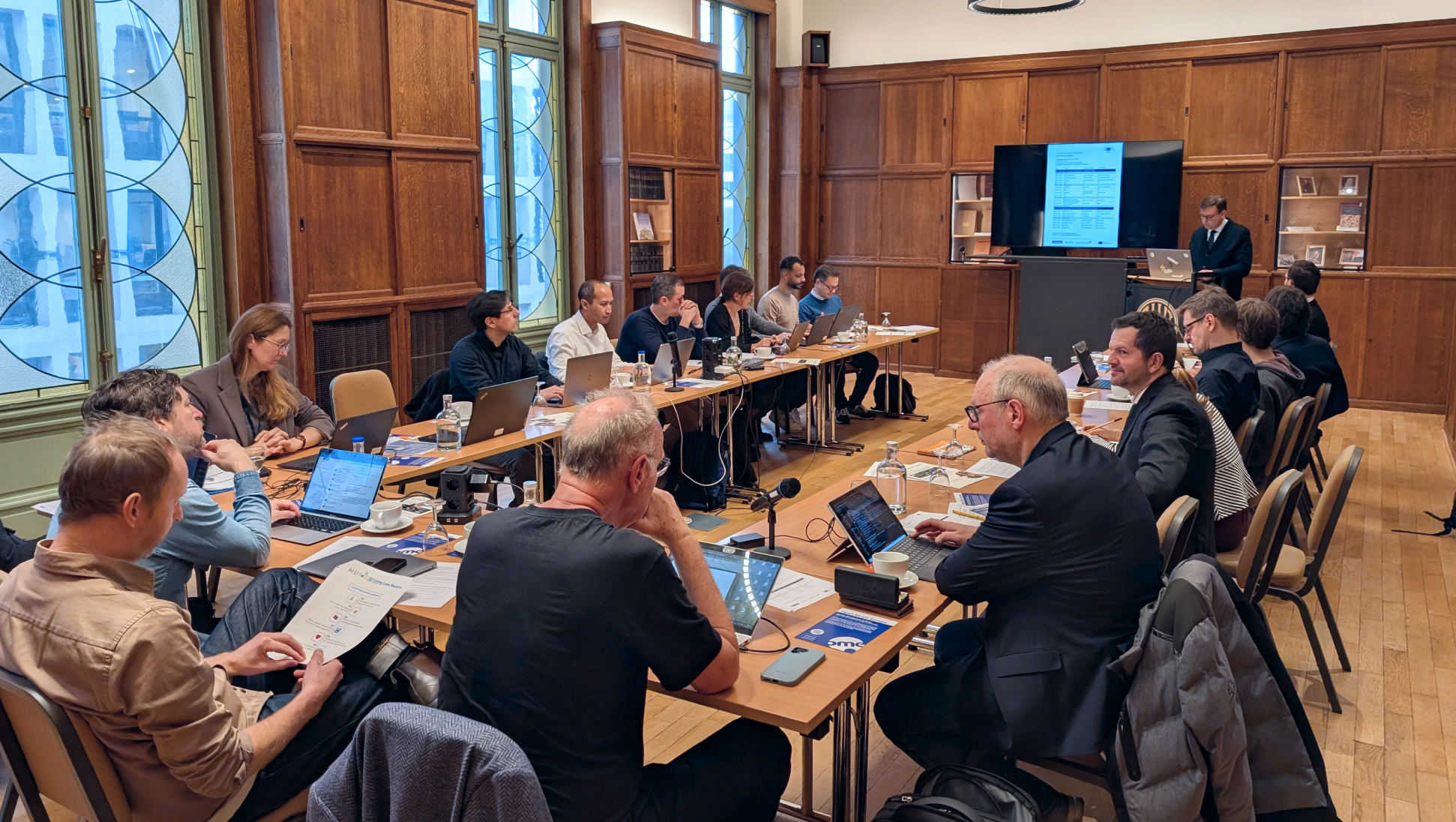
But data doesn’t translate into policy on its own. Evidence-based policymaking requires deliberate bridge-building between research outputs and institutional uptake. On December 9, 2025, our three projects gathered in Brussels for a policy roundtable designed to make this possible. Also in the room were researchers from the ongoing Study on the Discoverability of European Content and representatives from the Research Executive Agency, the Directorate-General for Communications Networks, Content and Technology (DG Connect), and the Directorate-General for Education, Youth, Sport and Culture (DG EAC)—most critically, the team responsible for Culture Compass implementation.
Why Now?
The timing was strategic. In 2025, the European Commission released the Culture Compass for Europe—the most ambitious EU cultural policy framework in recent memory. The Compass doesn’t just articulate vision; it establishes concrete timelines:
- 2026: Structured dialogue with cultural and creative stakeholders
- 2027: First periodic Report on the State of Culture in Europe
- 2027: Launch of EU Cultural Data Hub for evidence-based policymaking
These aren’t “someday-maybe” goals: they’re concrete and time-based. And they create a once-in-a-generation opportunity to embed music data into European cultural policy infrastructures from the ground up.
But opportunity comes with urgency. If music ecosystems aren’t well-represented in the stakeholder dialogue design, the Report’s data sources, and the Cultural Data Hub’s architecture, we’ll face another decade of music invisibility in official statistics.
What OpenMusE, Fair Muse, and Music360 Bring to the Table
The roundtable showcased what three years of intensive research delivers:
OpenMusE brings:
- Open music data- and metadata-sharing-space architecture (piloted in Slovakia, designed for federated EU-wide scaling)
- Representative music surveys across seven EU countries (Germany, France, Italy, Spain, Poland, Hungary, Slovakia) covering participation, access, and support for broader cultural policy aims
- Scalable pilot studies: live and recorded music valuation methods, Slovak Comprehensive Music Database, Live Music Census with maps and dashboards, ESRS-aligned sustainability survey, in-store playlist localization experiment
- Comprehensive mapping of legal, technical, and semantic interoperability barriers in music data systems
Fair Muse contributes:
- Multidimensional fairness framework encompassing remuneration equity, algorithmic accountability, cultural/linguistic diversity
- Fair Muse Toolbox: copyright infrastructure improvements, Fairness Score benchmarking, music data dashboard
- Policy recommendations on transparency mandates, metadata standards, cross-regulatory alignment
Music360 delivers:
- Music360 platform for artist and repertoire data sharing and discovery
- Audio fingerprinting platform linking venue-level music use to broader economic/societal value
- Integration architecture with existing data providers (MusicBrainz, Wikidata, Spotify API)
- Living Labs demonstrating music’s multidimensional impact (healthcare, socio-legal perspectives)
Three Projects, One Vision
While each project addresses different facets of music ecosystems, all three converge on core recommendations:
- Ensure music is represented in the 2027 Report on the State of Culture in Europe by integrating data collected in the three projects
- Integrate music dataspaces into the EU Cultural Data Hub: go beyond presenting statistics to enable permissioned microdata sharing, ecosystem modelling, trend analysis, and policy evaluation
- Build toward interoperability by design with existing European cultural data spaces (Cultural Heritage, Europeana, others) rather than building isolated silos
- Coordinate with cultural statistics frameworks via the formal adoption of ecosystem models that accurately represent transversal sectors like music
- Create standing mechanisms for music stakeholder participation in ongoing EU cultural policymaking—not one-off consultations, but resourced advisory structures with defined governance roles
The Brussels roundtable demonstrated a high degree of alignment across three independent research projects. That isn’t coincidental—it reflects convergent empirical findings on the state of music data in Europe, and what innovations are needed to enable truly evidence-based music policymaking.
Making It Last
The next step for OpenMusE is to systematically prepare our outputs for Cultural Compass integration:
- Datasets and documentation → available for Report on State of Culture baseline metrics
- Methodological protocols → transferable to other Member States and cultural sectors
- Open-source software and tools → ready for Cultural Data Hub implementation
- Policy briefs and discussion papers → recommendations grounded in three years of research
The goal here is to ensure that when the 2027 Report on the State of Culture is drafted and the EU Cultural Data Hub launches, music is there—not as an afterthought, but as a fully-developed domain with robust data and real stakeholder buy-in.
Interested?
The policy roundtable briefing report—including project summaries, recommendations, and alignment strategies with the Culture Compass—is available here. After Fair Muse and Music360 conclude, we’ll follow it up with streamlined recommendations endorsed by all three projects—representing three years of research and innovation, nearly €10 million in EU investment, and dozens of experts’ collective insight.
Alongside the Cultural Compass itself, we hope this can serve as a roadmap for ensuring music ecosystems are visible, valued, and well-governed in 21st-century Europe.