

Working with Data to Strengthen the Visibility of Slovak Music
SOZA (Slovak Performing and Mechanical Rights Society) is the collective management organisation that represents music authors in Slovakia and protects their copyright interests at home and abroad. As part of its long-term efforts to support authors and improve the use of music data, SOZA has been actively involved in the OpenMusE project.
The OpenMusE project has also received support from the Ministry of Culture of the Slovak Republic, which signed a Memorandum of Understanding back in 2023 together with Slovak and international partners on the use of the results of the analyses carried out within the project. The agreement reflects a shared commitment to strengthening data-driven approaches to music policy and cultural development.
Development of the Slovak Comprehensive Music Database (SSHD) became a clear path forward in order to address the data challenges we face. SOZA continues to build the database by collecting and updating data on authors and their musical works. The aim is to create a reliable and up-to-date source of information that can be synchronised with global knowledge platforms such as Wikipedia, as well as with music and national libraries and other trusted databases. In practice, this means that updating information in one place can improve music discoverability, simplify licensing processes, and support fairer royalty distribution.
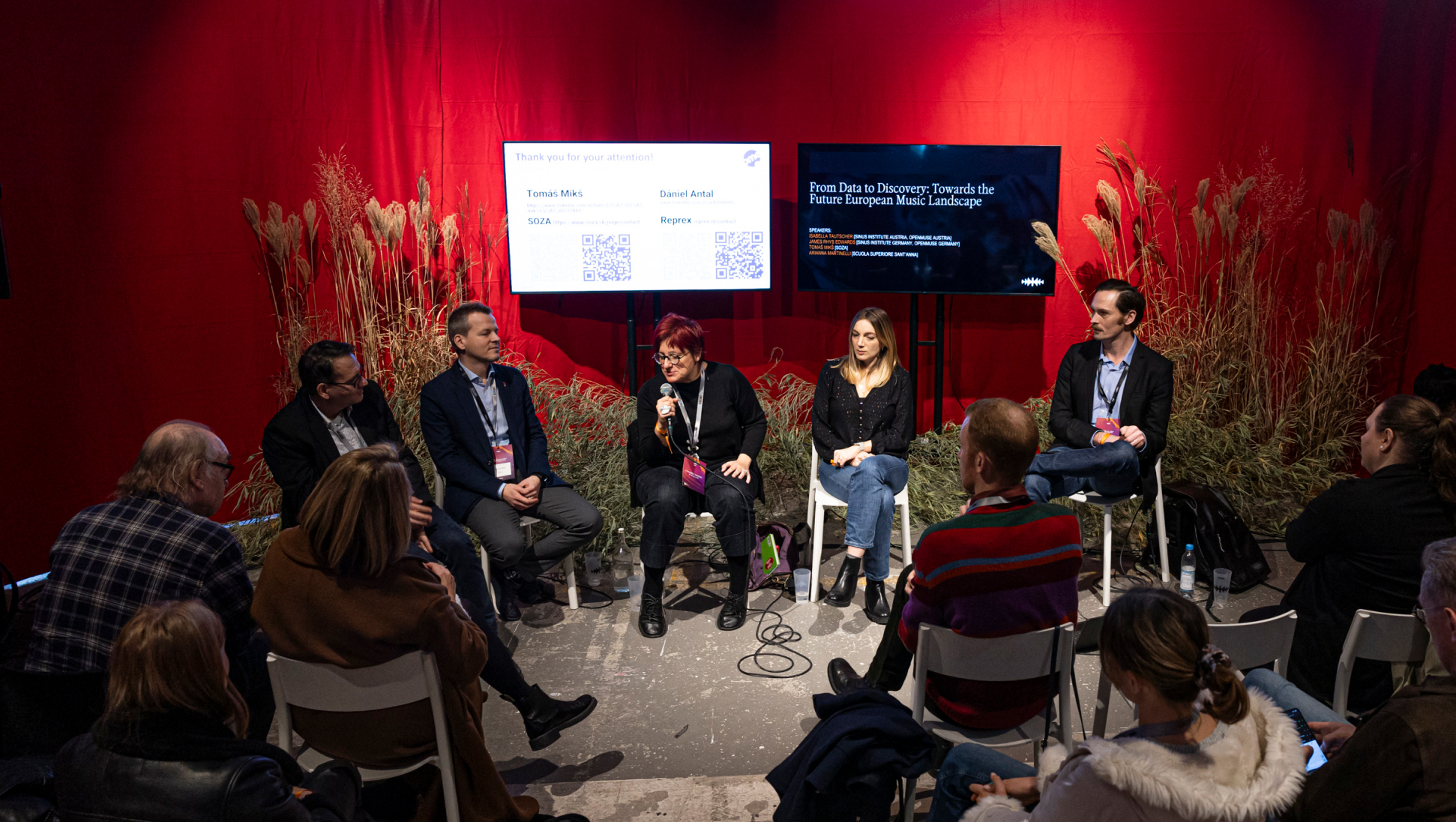
The database is being developed through a unique collaboration between currently four key Slovak music institutions — SOZA, the Music Centre (Hudobné centrum), the Music Fund (Hudobný fond) and Slovak National Library (Slovenská národná knižnica). By interlinking their databases and harmonising information about Slovak music, these institutions are laying the groundwork for a more connected and transparent music data ecosystem. This cooperation clearly demonstrates the practical value of the OpenMusE project and its potential to bring tangible benefits to authors and other music professionals. High-quality, interconnected data make it possible to better understand how the Slovak music ecosystem functions and help improve working conditions across the sector. Importantly, the database is not intended only for administrative purposes, such as verifying national radio quotas, but also for more detailed recommendations — for example, searching for music by region or thematic focus. The database is designed to help measure how much local Slovak music and how much diversity appears in playlists, charts, or programming. In practice, this makes reporting and decision-making easier for organisations such as editors, analysts, radios, or other cultural institutions, because they can check indicators in a convenient way.
A major part of the work was not technical, but legal and practical: GDPR made music metadata sharing much harder than it used to be, and the project had to treat this as a real constraint, not an afterthought. The initial idea was to rely on consent, but with a large membership base and low response rates, that approach was simply not workable in practice. The solution was to design the database so that sensitive information stays in a trusted internal environment, while the outside world only gets simple “outcome” information, without revealing personal details. On the governance side, the project used a legitimate-interest approach supported by a balancing test, offered an opt-out, and introduced separate access levels (public vs. available “on request”), with processing handled under controlled arrangements and supervision.
Overall, the OpenMusE project highlights the crucial role that high-quality data play in today’s music ecosystem. By improving how music data are collected, connected, and used, the project aims to increase the visibility and financial recognition of local authors from regions across Europe — ensuring that their work can be more easily found, understood, and fairly rewarded in the digital space.Začiatok formuláraSpodná časť formulára
To access the original blog post in Slovak at SOZA’s Website, click here.